
How to Choose Hardwood Flooring
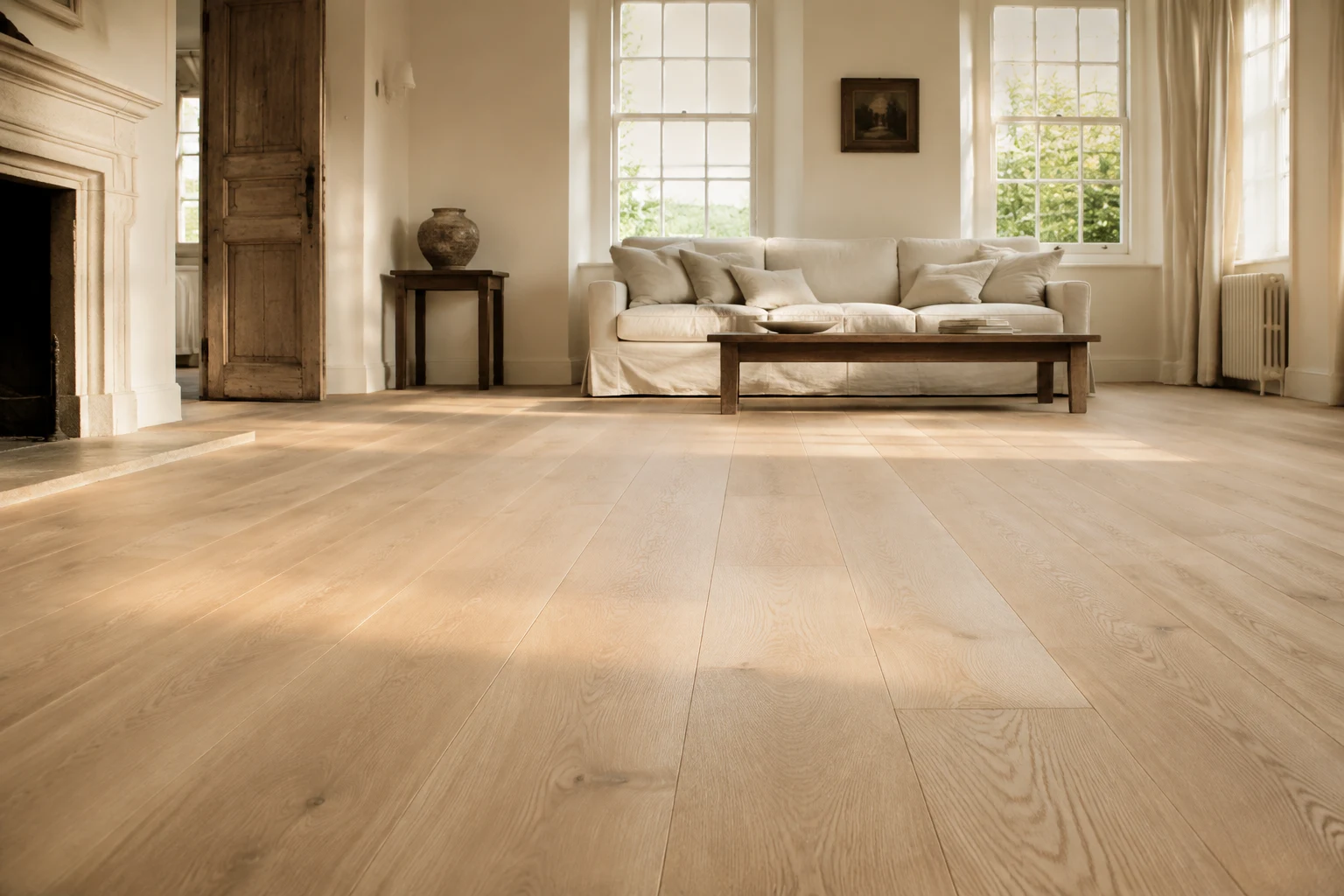
Start with the room, then choose the board
A beautiful floor should make sense for the way your home is built and the way you live in it. Before comparing colors, establish the room, the subfloor, the finished floor height, and the conditions the wood will experience. A second-floor bedroom over plywood presents a different installation problem from a ground-floor living room over concrete. The same natural oak appearance can be offered in different constructions, and those differences matter long after the sample has won you over.
Measure each space, note adjoining surfaces, and ask your installer to inspect the substrate. Door clearance, stair nosings, transitions, and underlayment all influence the complete assembly. Choosing the board in isolation can leave an otherwise lovely floor awkwardly higher than the next room. Bring those details into the selection early, while changing thickness or construction is still straightforward.
Understand solid and engineered construction
Solid hardwood is wood through the thickness of the board. Engineered hardwood has a real wood surface over a supporting structure. The core, wear layer, adhesive requirements, and permitted installation methods differ between products. Engineered does not mean laminate, and a hardwood face does not make a floor waterproof.
Compare the exact manufacturer's specification rather than relying on the category name. A stated wear layer helps you understand the construction, but it does not guarantee a fixed number of future sandings. Previous sanding, remaining wood above the tongue, surface damage, and the refinishing method all affect what can safely be done. An experienced flooring professional should assess a floor before refinishing.
Look beyond the color name
Species, cut, grade, and finish each change the appearance of a wood floor. White oak often provides the neutral starting point for light interiors. Walnut introduces deeper natural variation. Rift-sawn and quarter-sawn boards describe how the log was cut, while select and character grades describe a different aspect of the visual mix. Neither a color name nor a single small sample shows every board you will receive.
Lay several samples beside cabinetry, stone, wall paint, and upholstery. Look at them in morning daylight and under the lamps you use at night. A matte surface and a glossier finish can make the same stain appear quite different. Room photographs are useful for inspiration; physical samples and the approved specification should guide a purchasing decision.
Choose a layout with the whole floor in mind
Long plank flooring can make an open room feel calm and continuous. Herringbone creates an interlocking rhythm from rectangular blocks. Chevron creates a more continuous zigzag with angled ends. These patterns are not interchangeable, and patterned layouts need deliberate setting-out around doorways, borders, and the centerline of the room.
Have the installer confirm the layout and cutting allowance before ordering. There is no single waste percentage that suits every room. Diagonal walls, borders, closets, stairs, and patterned installations can change the quantity substantially. The final order should account for both the installer's allowance and the manufacturer's actual pack coverage.
Resolve the practical details before ordering
A useful flooring quotation identifies the manufacturer, species, construction, grade, finish, dimensions, order quantity, freight arrangements, and the items excluded from the price. Ask whether trims, stair parts, adhesive, underlayment, and installation are separate. Confirm lead time and freight access before planning around a delivery date.
Once the material arrives, check the shipment and follow the manufacturer's storage, acclimation, and installation directions. Keep the room conditions within the product's stated limits. Save the purchase paperwork, product labels, and care guidance so maintenance and any later repair start with the correct information.
Questions before you choose
Is engineered hardwood real wood?
Yes. Engineered hardwood has a real wood wear surface over a supporting core. Compare the core type and wear-layer thickness for the exact product.
Is solid hardwood always better?
No. The better choice depends on the subfloor, room conditions, desired thickness, installation method, and refinishing expectations.
Can hardwood go in a bathroom?
Do not assume it can. Repeated standing water and moisture make bathrooms a demanding setting. Use only a product and installation specifically approved for the application.
Should I order a sample first?
Yes. View more than one sample in your own light, alongside adjacent finishes. Natural wood variation means a small sample cannot represent the full shipment.
How much flooring should I buy?
Start with measured area, then have your installer add the cutting allowance for your layout and round to the actual pack size.
Does the flooring price include installation?
Only when the written quotation says so. Separate material, freight, accessories, preparation, and labor when comparing offers.
Can every hardwood floor be refinished?
No. Refinishing depends on the remaining usable wood, construction, condition, and prior sanding. Have a qualified professional assess the specific floor.